





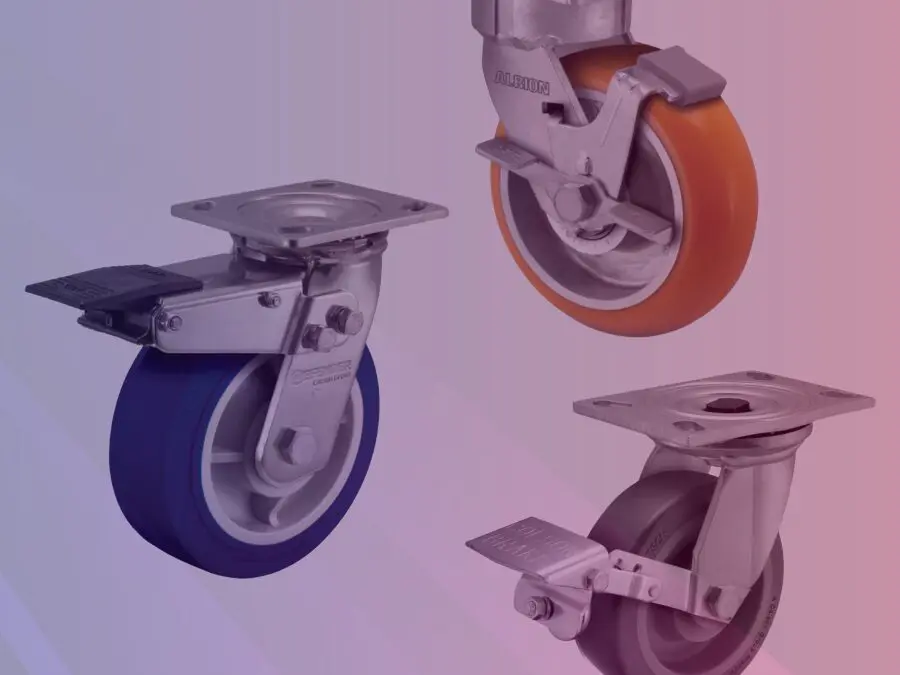
When you think of moving your equipment from point a to point b, your first thought is what type of wheel is needed for this task. At C.P. Lauman, our caster specialists are experts in all things you need to keep your business rolling. Our team determines which configuration (swivel caster or rigid caster), the brand, and type of series that will work best for your needs. Deciding what kind of brakes you’ll need to get the job done is the next most important step. After all, you don’t want your utility carts, or bakery racks rolling away from you. To get you started, we’re covering the reasons why caster brakes are the essential component you need to uphold safety standards in your workplace.

How to Choose the Right Caster Brakes
For the purposes of this post, we’ll be focusing on swivel casters. The brakes mentioned in this post work best with swivel rigs (casters) because the brakes engage, while the caster maintains its 360 degree swivel motion. Most rigid casters do not offer brake options. A rigid caster’s primary purpose is to move forward and backward, making them less likely to “wander” like a swivel caster might. C.P. Lauman distributes top caster brands like Colson Casters, Albion Casters, MedCaster, and Darcor which all carry a variety of swivel and rigid caster options in various sizes, for different applications. We’ll be able to help you find exactly what you need, in the quantities you need, from the top quality brands in the industry.
The first step in deciding which type of brake your swivel caster needs is determining the size of your load. Will your casters be responsible for carrying heavy duty loads, lightweight equipment, or medium size loads? The brakes you use must be rated to carry the full weight of your equipment, safety factor, and payload, in order to prevent hazardous situations, or overuse of your casters.
This step is where we start because brakes serve one purpose… to stop. If your brakes cannot withstand the weight of your load, your casters will keep rolling, with or without you. Once you know your caster load capacity, we can narrow down your brake type.

What Is the Difference Between Static Vs. Dynamic Weight Load Capacity?
Static weight refers to the load limit your casters need to hold when stationary. Versus the dynamic weight which refers to the amount of weight a caster can safely support while your equipment is moving. Understanding the difference between these two weight factors is the next step in determining the right type of brake for your needs.
You must select a brake rated higher than your required load capacity to prevent safety issues and accidents. Doing this will ensure you’ll have a reliable operation, longer life of your equipment, and overall stability. Here are two quick equations to help you determine the load capacity you’re working with, so you can choose the correct caster sizes and corresponding brakes.
Equation for determining the resting weight of your load, or static weight:
static caster load capacity = (equipment weight + payload) / (number of casters – 1)
Equation for determining the rolling weight of your load, or dynamic weight:
dynamic caster load capacity = ((equipment weight + payload) * safety factor / number of casters )
Knowing the difference between static weight versus dynamic weight is especially important when equipment remains parked with brakes engaged, or holding it securely in position for a long period of time. You may be wondering, “what’s the worst that can happen if I choose the wrong brakes?

Types for Caster Brakes
-
Side Lock Brakes
-
-
- The most common type of brake for casters
- Brake is on the side of the wheel
- Comes in multiple variations
- Ideal for industrial equipment, such as dollies, carts, and material handling equipment requiring precise movement
-
-
Top Lock Brakes
-
-
- A type of side lock brake
- An “L” bar slides down on top of the wheel providing tension when the brake is engaged
- Ideal for light to medium duty load capacities like workstations, toolboxes, and serving carts
-
-
Cam Brake
-
-
- Similar to the top lock brake
- Uses tension on the wheel hub to brake instead of the “L” bar
- Ideal for light to medium duty loads
-
-
Face Contact Brake or Tech Lock Brake
-
-
- Known by both names
- Face contact brake is more commonly used
- Engage the brake by pressing the pedal at the front of the wheel
- This brake type uses medal to medal tension to stop the caster from moving
- Ideal for delicate or sensitive materials that require careful handling
-
-
Total Lock Brake
-
-
- Similar to face contact brake
- Completely locks all wheel movement, including the swivel motion of your casters
- Provides the highest level of stability and control
- Ideal for transporting fragile or sensitive items
-
-
Directional Lock Brake
-
-
- Locks the swivel motion of your caster
- Your caster can still move freely back and forth
- Ideal for maneuvering heavy loads in tight spaces
-
-
Floor Lock Brake
-
- A unique solution for most applications
- Commonly used to accompany casters with brakes
- Uses a pedal to engage brake in a downward motion
- Creates pressure to disengage the use of the wheels
Why Caster Brakes Are Non-Negotiable for Safety & Efficiency
Choosing a brake with insufficient load capacity can lead to premature wear on your casters, reduced braking performance over time, and present other potential safety hazards too. When you push or pull your utility carts or medical equipment, for example, what kind of force will the casters need to hold?
If you know there may be frequent or abrupt stops, slight inclines like pushing supplies up ramps, will your brakes withstand those quick changes easily? What kind of operating conditions will your casters be rolling over or through? What type of floors or surfaces are present? What temperatures, debris, and environments will you be working in?
With so many factors at play, it’s important to take time to think about each of the questions mentioned above. Our caster specialists are here to work with you through all these factors and more. Reach out via email to one of our C.P. Lauman team members here, sales@cplauman.com. Or, submit an inquiry for the casters you’re looking for on our contact page.
Do you know exactly what you want? Use our “Request a Quote” button on the item’s page for an even faster response. See all caster products here: Albion Casters, Colson Casters, Darcor, MedCaster, and Shepherd.
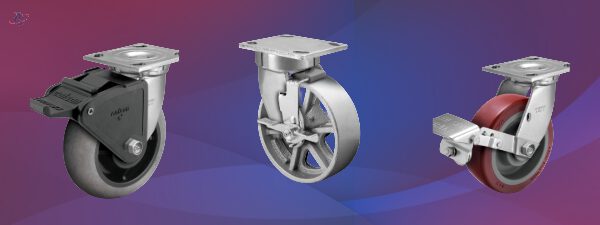
Before you make your final decisions, it’s important to have an overview of the different brake options available to you. While there are dozens of different caster brakes to choose from, the brake types listed below are the most common. Always keep safety and efficiency top of mind when deciding the type of brakes you need for your unique applications.