





Casters
Showing 121–135 of 3693 results
-

SKU: 310VM06501R
Albion 310 Series Heavy Duty Kingpinless Caster 310VM06501R
$0.00Material: Crowned Tread Ductile Iron
Load Capacity (lbs): 4100
Wheel Diameter (inch): 6
-
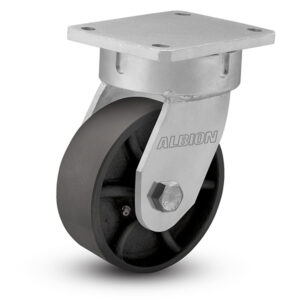
SKU: 310VM06501S
Albion 310 Series Heavy Duty Kingpinless Caster 310VM06501S
$0.00Material: Crowned Tread Ductile Iron
Load Capacity (lbs): 4100
Wheel Diameter (inch): 6
-
SKU: 310VM06509R
Albion 310 Series Heavy Duty Kingpinless Caster 310VM06509R
$0.00Material: Crowned Tread Ductile Iron
Load Capacity (lbs): 4100
Wheel Diameter (inch): 6
-
SKU: 310VM06509S
Albion 310 Series Heavy Duty Kingpinless Caster 310VM06509S
$0.00Material: Crowned Tread Ductile Iron
Load Capacity (lbs): 4100
Wheel Diameter (inch): 6
-
SKU: 310VM08501R
Albion 310 Series Heavy Duty Kingpinless Caster 310VM08501R
$0.00Material: Crowned Tread Ductile Iron
Load Capacity (lbs): 4100
Wheel Diameter (inch): 8
-
SKU: 310VM08501S
Albion 310 Series Heavy Duty Kingpinless Caster 310VM08501S
$0.00Material: Crowned Tread Ductile Iron
Load Capacity (lbs): 4100
Wheel Diameter (inch): 8
-
SKU: 310VM08509R
Albion 310 Series Heavy Duty Kingpinless Caster 310VM08509R
$0.00Material: Crowned Tread Ductile Iron
Load Capacity (lbs): 4100
Wheel Diameter (inch): 8
-
SKU: 310VM08509S
Albion 310 Series Heavy Duty Kingpinless Caster 310VM08509S
$0.00Material: Crowned Tread Ductile Iron
Load Capacity (lbs): 4100
Wheel Diameter (inch): 8
-
SKU: 310VM10501R
Albion 310 Series Heavy Duty Kingpinless Caster 310VM10501R
$0.00Material: Crowned Tread Ductile Iron
Load Capacity (lbs): 4100
Wheel Diameter (inch): 10
-
SKU: 310VM10501S
Albion 310 Series Heavy Duty Kingpinless Caster 310VM10501S
$0.00Material: Crowned Tread Ductile Iron
Load Capacity (lbs): 4100
Wheel Diameter (inch): 10
-
SKU: 310VM10509R
Albion 310 Series Heavy Duty Kingpinless Caster 310VM10509R
$0.00Material: Crowned Tread Ductile Iron
Load Capacity (lbs): 4100
Wheel Diameter (inch): 10
-
SKU: 310VM10509S
Albion 310 Series Heavy Duty Kingpinless Caster 310VM10509S
$0.00Material: Crowned Tread Ductile Iron
Load Capacity (lbs): 4100
Wheel Diameter (inch): 10
-
SKU: 410PY06501R
Albion 410 Series Heavy Duty Kingpinless Caster
$0.00Material: Polyurethane on Cast Iron
Load Capacity (lbs): 2200
Wheel Diameter (inch): 6
-
SKU: 410PY08501S
Albion 410 Series Heavy Duty Kingpinless Caster
$0.00Material: Polyurethane on Cast Iron
Load Capacity (lbs): 2600
Wheel Diameter (inch): 8
-
SKU: 410PY08501R
Albion 410 Series Heavy Duty Kingpinless Caster
$0.00Material: Polyurethane on Cast Iron
Load Capacity (lbs): 2600
Wheel Diameter (inch): 8


Caster Materials & Applications
The wheel material is one of the most important variables in caster selection. The right material depends on floor type, load requirements, noise sensitivity, chemical exposure, and whether floor marking is a concern. Here is a quick overview of the materials we stock:
| Wheel Material | Best For | Floor Types | Load Range |
|---|---|---|---|
| Heatwave | High-temperature applications — bakery racks, food manufacturing carts/racks, and powder coating carts/racks. Glass-filled polymer blend, standard ball bearings. | Rack/cart-mounted (not floor-rolling) | See temp. range* |
| Polyurethane | Ergonomics, shock absorption, noise reduction, and durability; non-marking and floor-protective; performs in extreme cold and with mild chemicals, oil, and grease. | Carpet, brick, concrete, asphalt, wood, steel, and tile | Light to Heavy Duty |
| Rubber (hard) | Exceptional floor protection, shock absorption, and quiet mobility; suited for water, steam, metal chips, and mild chemicals. | Carpet, brick, concrete, asphalt, wood, steel, and tile | Light to Medium Duty |
| Nylon | High load capacities and high temperatures; impact- and corrosion-resistant; ideal for frequent wash-down environments with steam, chemicals, and oils. | Carpet, brick, concrete, and steel | Light to Medium Duty |
| Cast Iron | Strength in the most abusive indoor/outdoor applications; high-capacity loads, hot and cold temperatures, mild chemicals, oil, grease, and metal debris. | Concrete and steel | Light to Heavy Duty |
| Phenolic | Durability and high load capacity with resistance to most oils; withstands extreme temperature fluctuations. Not recommended for frequent water/steam exposure. | Carpet, brick, concrete, and steel | Light to Medium Duty |
*Heatwave temperature range: -20°F to 475°F (intermittent to 525°F). Available in a 4″ diameter x 1½″ wide wheel, with 5/16″ or 3/8″ ball bearing or ½″ plain bore options.
Industries & Applications We Serve
C.P. Lauman offers a wide range of casters for use across many applications. Our product range is broad enough to cover virtually any commercial or industrial application:
- Beverage / Food Service / Product Distribution
- Dairies
- Greenhouses
- Bakeries
- Medical / Pharmaceutical
- Entertainment
- Food Processing
- Manufacturing
- Sheet Metal Fabricators
- Laundry Services
Caster Selection Guide FAQs
What is the difference between swivel and rigid casters?
Swivel casters rotate 360 degrees for full maneuverability, while rigid casters are fixed and only roll in one direction. Most carts use a combination, swivel at the front for steering, rigid at the rear for stability.
How do I calculate what load capacity I need for my casters?
Divide the total loaded weight by the number of casters, then multiply by 1.25 for a safety factor. For example, an 800 lb cart on four casters needs each caster rated for at least 250 lbs, round up to the next available rating, never down.
What caster wheel material is best for concrete floors?
Polyurethane is often the best choice for concrete floors; it handles heavy loads, resists abrasion, and rolls quietly without marking the surface. For very heavy loads, hard nylon or cast iron wheels are also a strong option.
Are there casters specifically designed for food service or washdown environments?
Stainless steel casters with sealed bearings are the right choice for food service and washdown environments. They resist corrosion, meet NSF cleanliness standards, and hold up to commercial cleaning chemicals.
What does ‘total lock’ mean on a locking caster?
A total-lock caster immobilizes both the wheel and the swivel head with a single pedal, preventing the equipment from rolling or rotating. It is the most secure brake option and is commonly specified for medical carts, lab equipment, and workstations.
How do you install casters?
The installation method depends on the mount type. Plate-mount casters bolt directly to the equipment frame via a top plate; stem-mount casters press or thread into a pre-drilled socket on the equipment leg. Always confirm the bolt pattern or stem diameter matches your equipment before installing.
What size casters do I need?
Caster size is primarily determined by wheel diameter. Use 3–4 inch wheels for light-duty applications like carts and office furniture; 4–6 inch wheels for medium-duty industrial use; and 6–8 inch or larger wheels for heavy equipment or rough terrain. Larger wheels roll more easily and require less push force, making them better suited for heavier loads and longer distances.
How long do casters last?
A properly specified caster used within its rated load capacity in a clean indoor environment can last several years. Lifespan depends on load weight, floor surface, and wheel material; overloading or abrasive floors will shorten it significantly. Regular inspection and lubrication of swivel raceways and bearings will extend service life.